D01 → D60 · 2026.07.06 – 09.03
Nine Weeks
Sixty days, nine weeks. Morning is input; afternoon is output.
One stop per week, down the timeline. Morning input on the left, afternoon output on the right.

Quantum Science, AI & Data Analytics
Arrival and orientation, then everyday science into the quantum world: photons, electrons, and the language shared by AI and biology. With KS Huang, Mark Gyure (UCLA CQSE), William Yu (UCLA Anderson).
A shared-vocabulary concept map across electrons, photons, quantum and AI, closing with a three-minute teach-back.
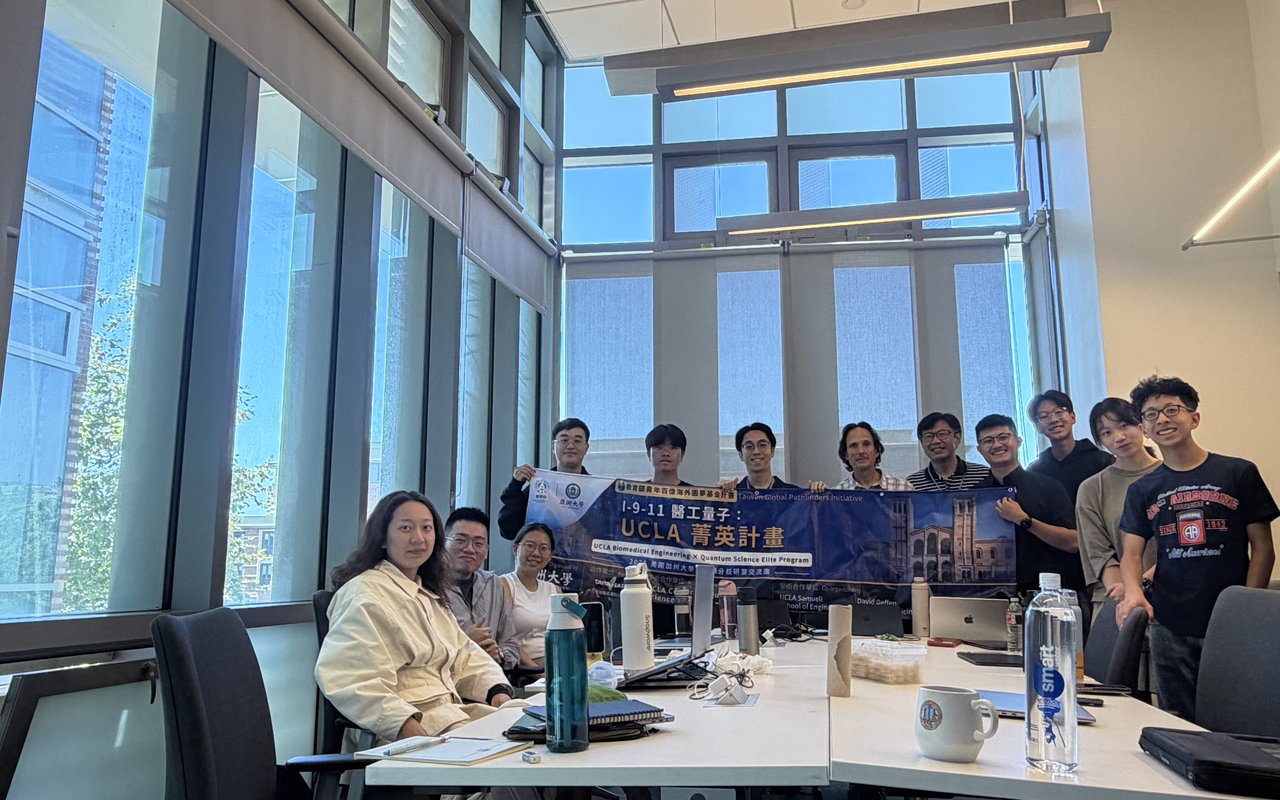
Field updates & photoslive during the program
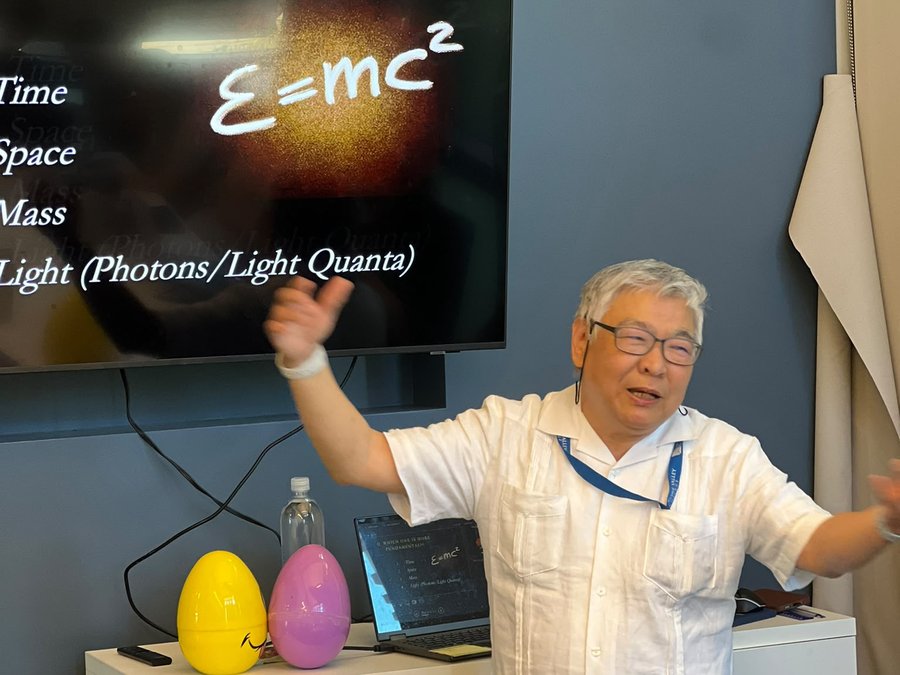
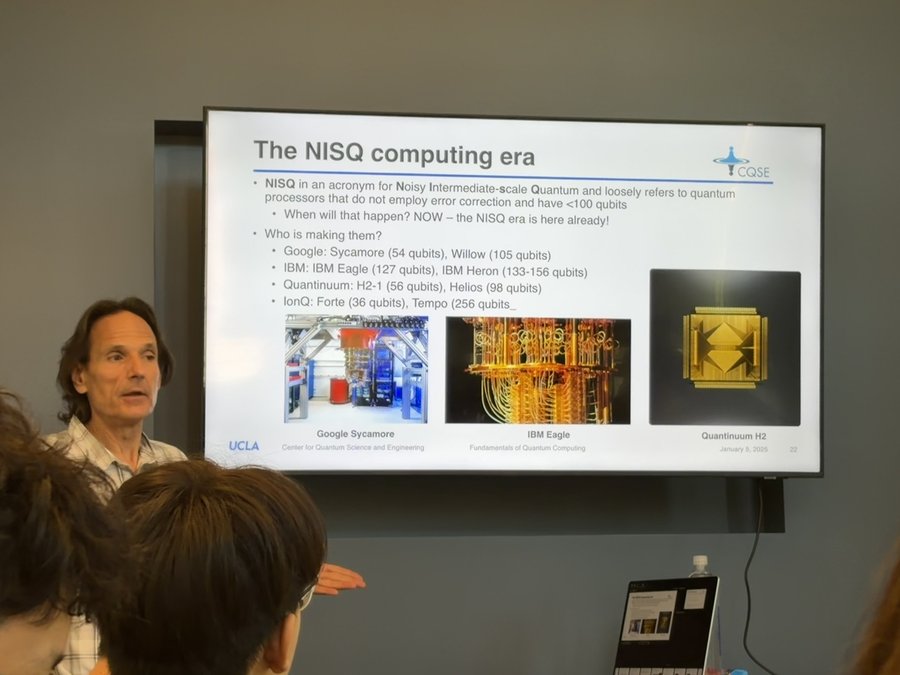
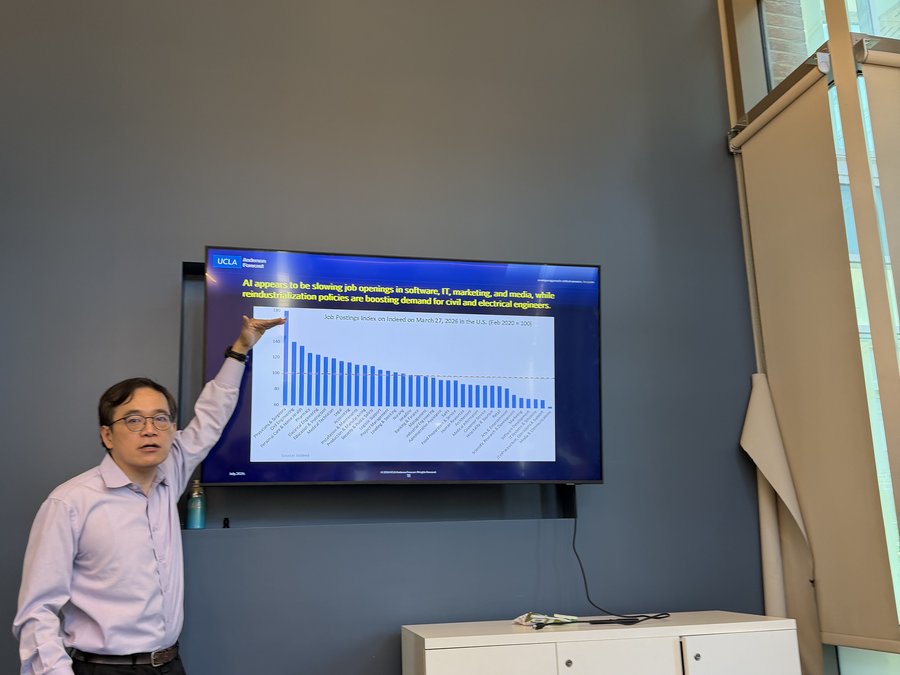
Week one started with Prof. Yen's welcome and KS Huang opening up the quantum ideas: superposition, uncertainty, the observer effect. Teams picked their names and the three words that define them. Mark Gyure took us from qubits and entanglement to decoherence, error correction and the NISQ era; William Yu closed the week on AI, productivity and the job market.
Biology, Bioscience & Health Data
Quantum science and technology for sensing, imaging, computing, communication, AI and biomedical applications, with terahertz electronics and photonics (Mona Jarrahi, UCLA).
A future computer-system design integrating electronics, photonics, quantum and AI architecture.
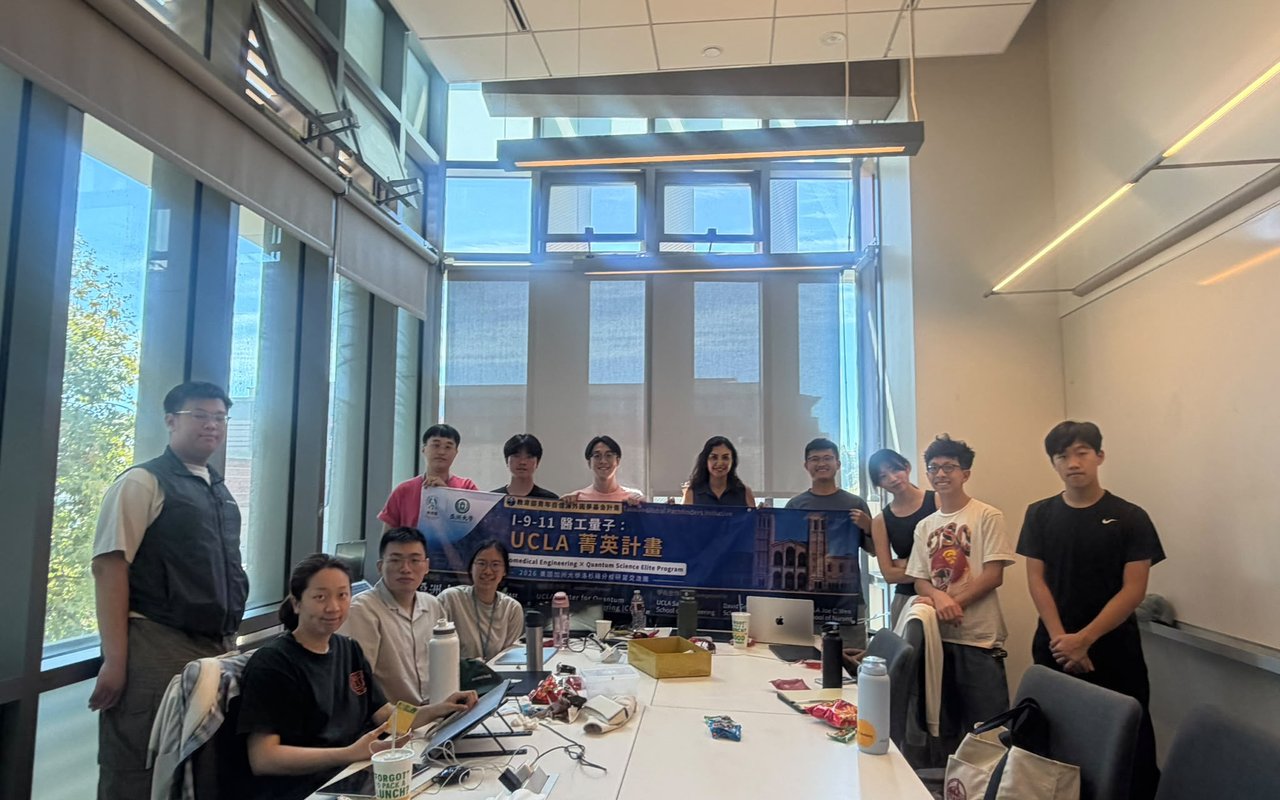
Field updates & photoslive during the program
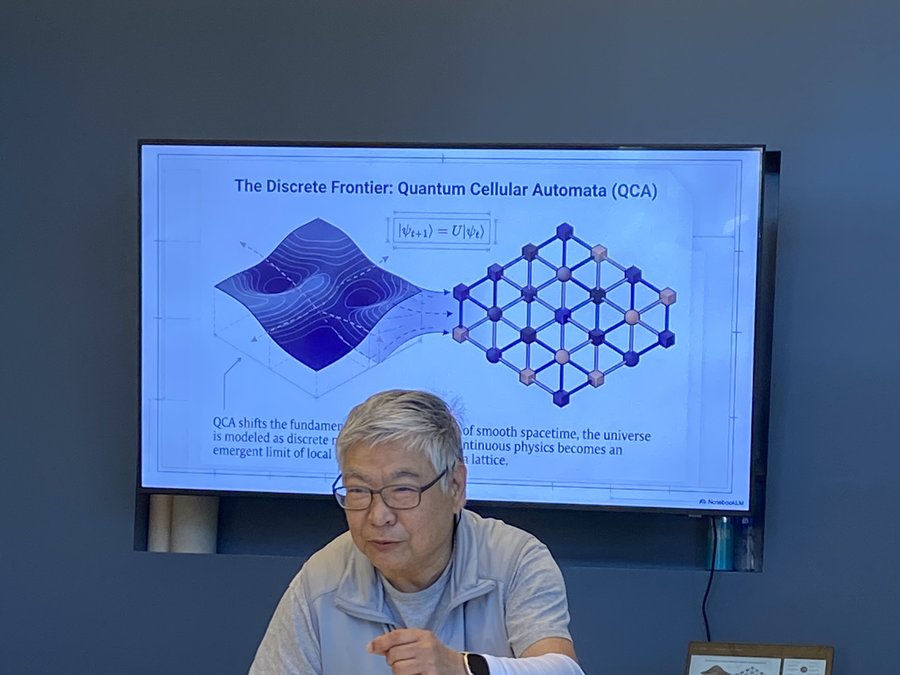
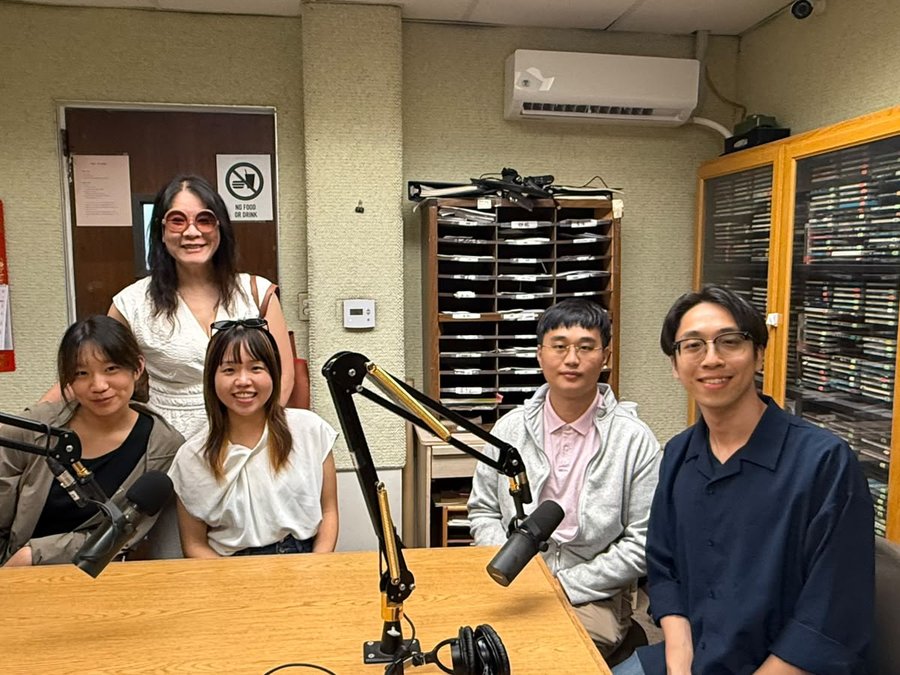
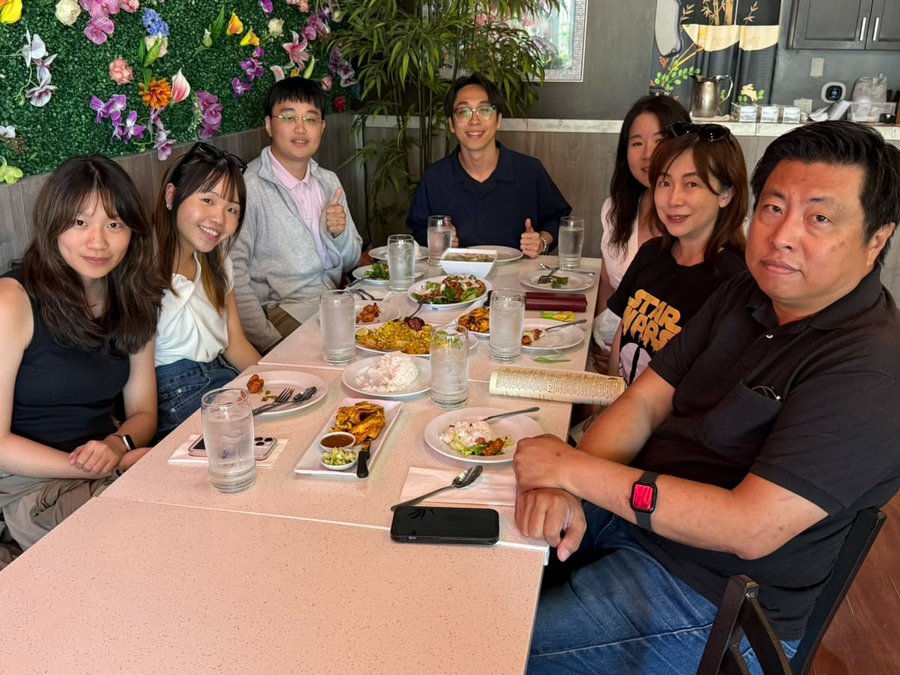
KS Huang carried the quantum thread further: normalization and scaling, amplitude and phase, interference and entanglement, and where quantum sensing meets the real world (NV centers, EEG, MRI), closing on quantum cellular automata. Mona Jarrahi then opened up terahertz photonics and its uses in imaging, security and materials.
Neuroscience & Brain Research
Neuroscience and engineering; neurobehavioral genetics and neurodegenerative disease (C.Y. Daniel Lee); brain research and lab tours (Gina Poe, UCLA Brain Research Institute).
A healthcare-sensing case: select one disease or societal problem and design a sensing or AI solution.
Field updates & photoslive during the program
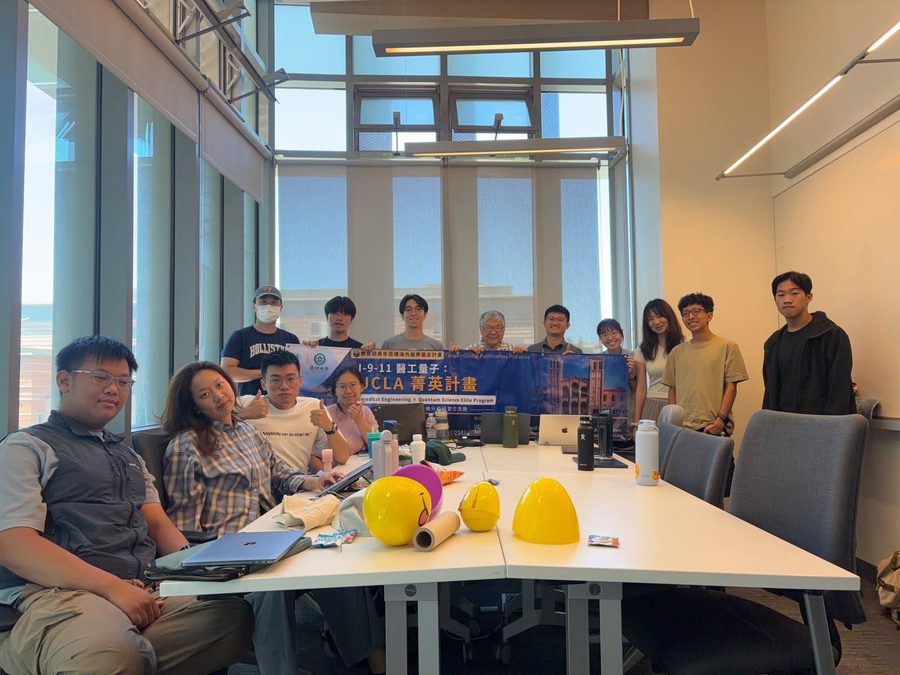
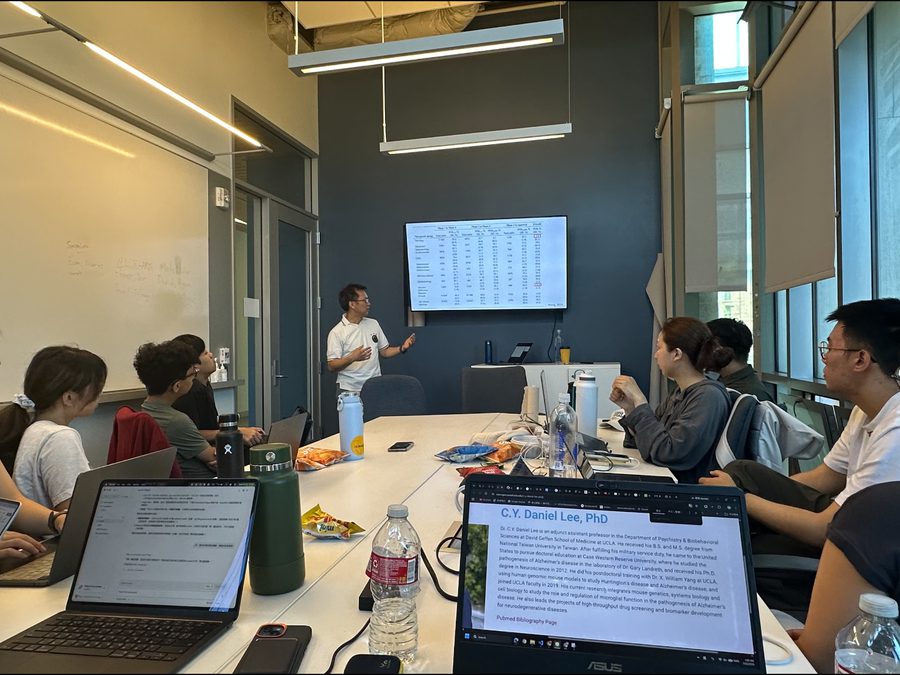
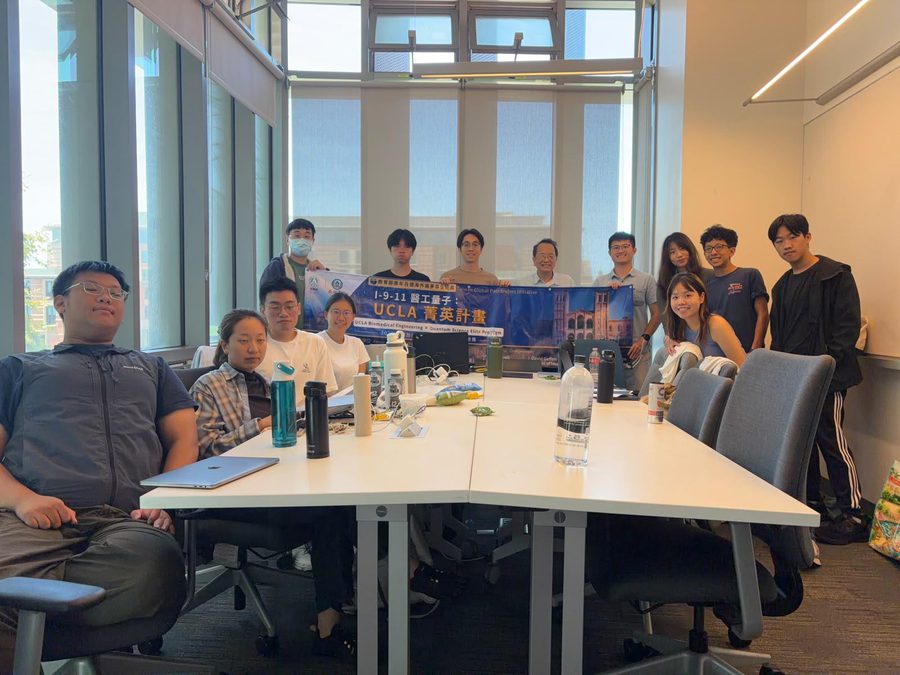
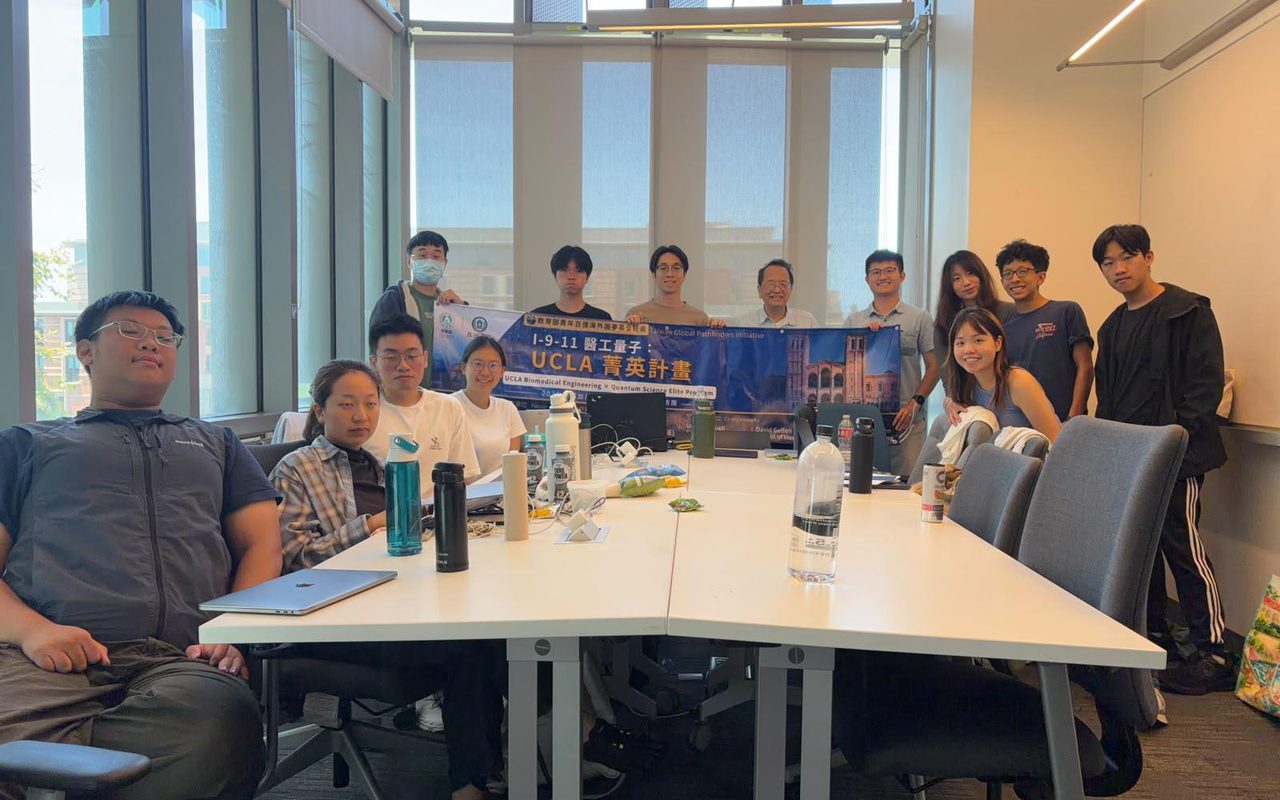
KS Huang opened week three by tying the four pillars — photons, electrons, quantum and AI — into a single biomedical stack: optical biopsy, photoacoustic imaging with optogenetics, in-vivo nanorobotics, and NV-diamond quantum sensors for early cancer and amyloid detection. He closed on error correction as the thread running through quantum computing, the sleeping brain clearing amyloid, and growth from difficulty. C.Y. Daniel Lee took us through animal models and their construct, face and predictive validity, then into Alzheimer's genetics and the TREM2 receptor that governs how microglia clear plaques. Hong-Zong Lin finished the week on predictive AI: why clinical data is small and wide, and how full Bayesian inference keeps causation and dependent features intact for real-time digital twins.
Quantum Science, Semiconductors & Materials
Quantum science and engineering with lab tours (Richard Ross); semiconductor technologies (Marko Sokolich); solar energy and materials science (Yang Yang).
A lab or technology case study on applications in quantum, semiconductors, materials, or neuroscience.
Field updates & photoslive during the program
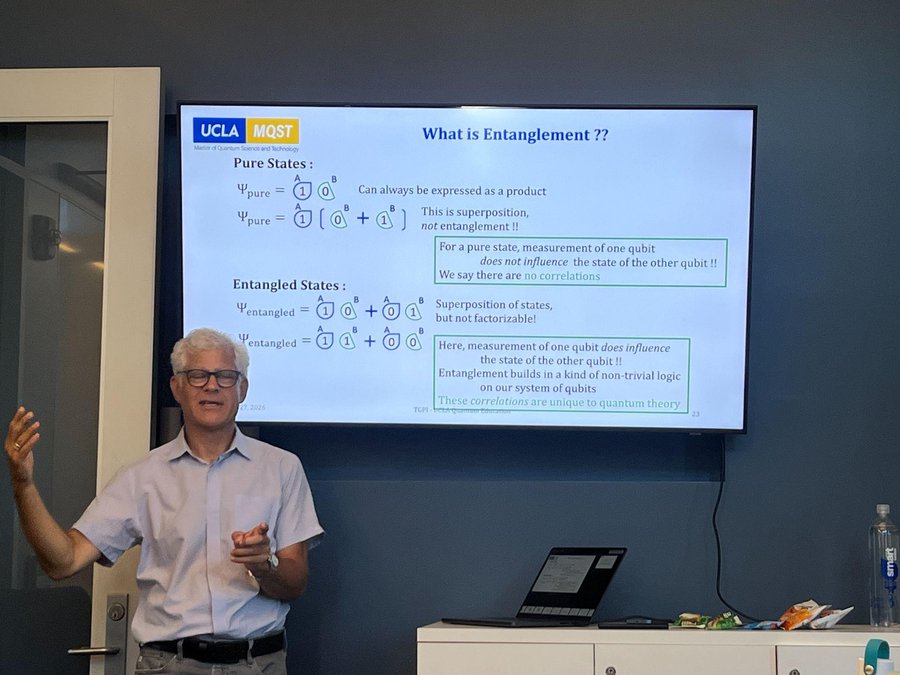
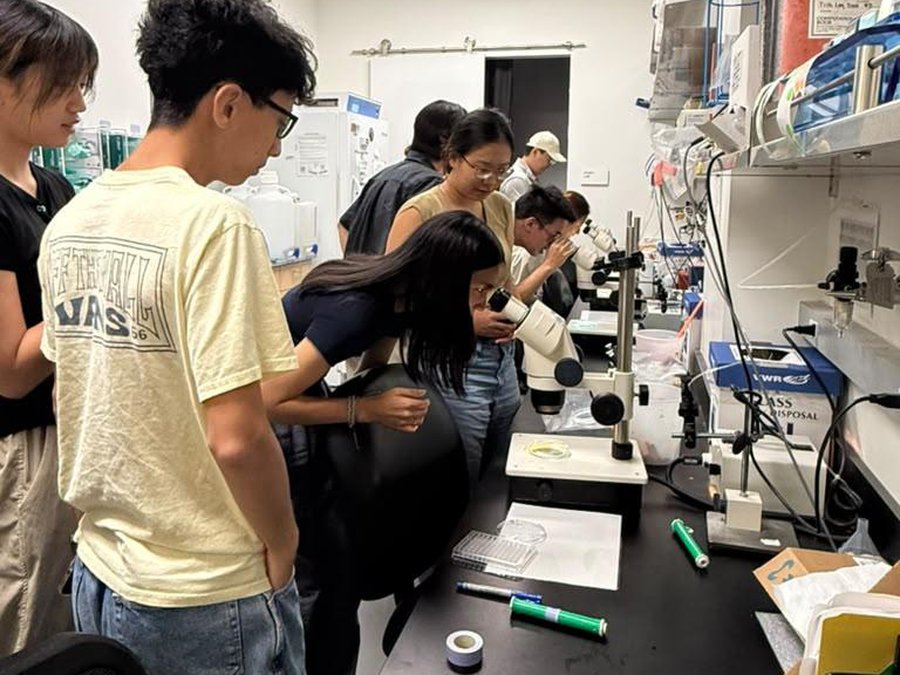
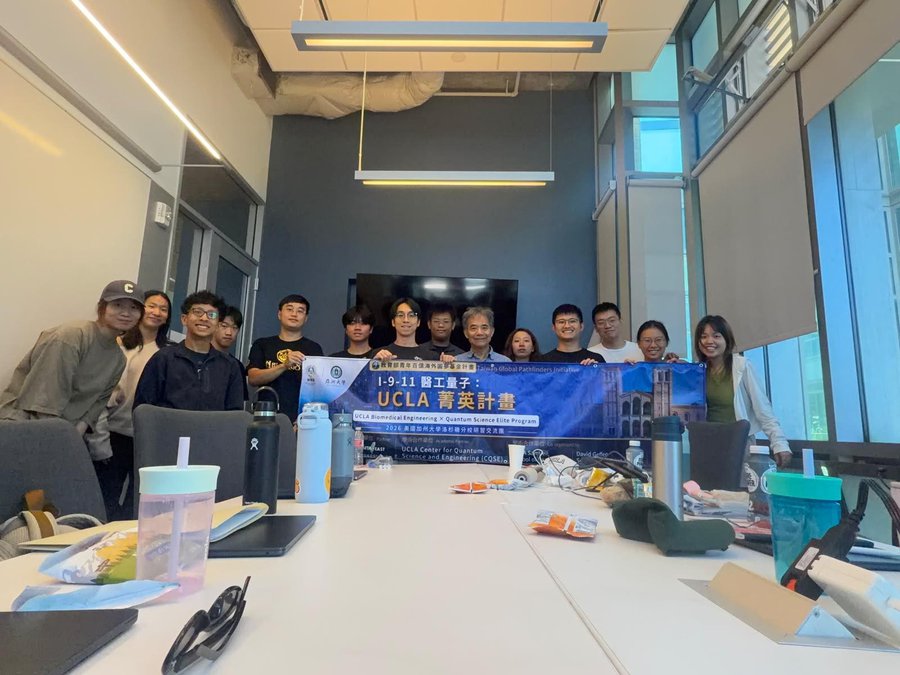
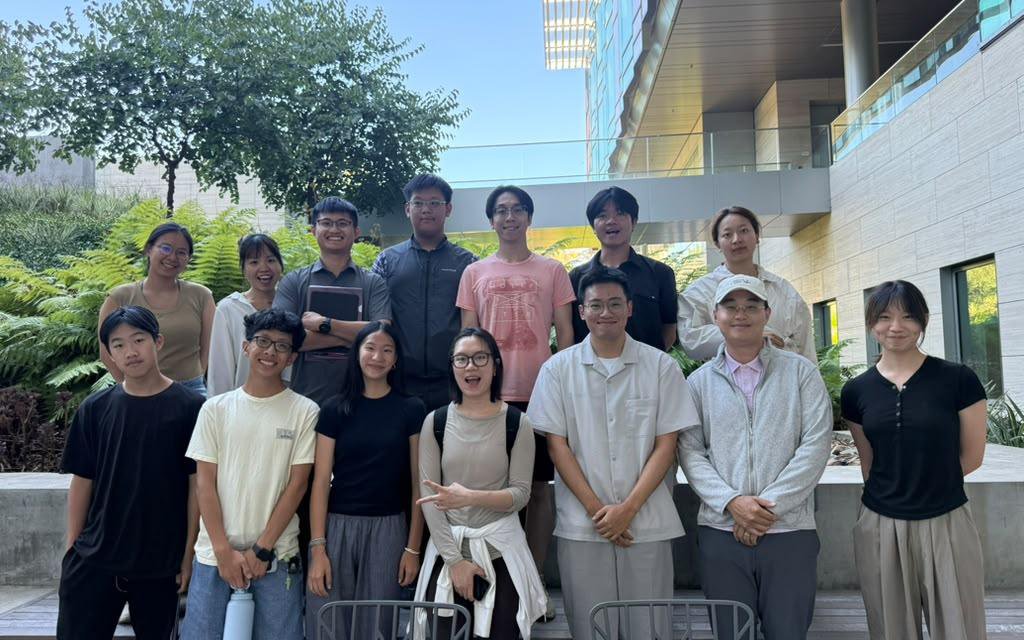
Richard Ross opened week four on quantum information: probability amplitudes, single electrons trapped in voltage-gated quantum dots, and entanglement that measurement risks collapsing. Anita Wu then took us through heparan sulfate, where sulfation patterns more than the sugar backbone decide what it binds and synthesis points toward cancer immunotherapy; Yun Chiu mapped zebrafish sleep circuits through orexin and TRPV1. Marko Sokolich opened up micro- and nanofabrication: doping, then deposition, photolithography and etching repeated layer by layer, down to the quantum tunneling that leaks current below 1 nm. Yang Yang took us from research-scale perovskite cells approaching 27 percent efficiency to the heat, moisture and oxygen that degrade them, closing on failure as part of the process. Gina Poe closed on the memory consolidation that only sleep allows, and Nardo finished the week on deep-tech venture capital, infrastructure and founding teams.
Medical Pharmacology, Nanotech & Biomarkers
Nanotechnology, liquid biopsy and biomarkers, from the NanoVelcro chip to digital twins (Hsian-Rong Tseng, UCLA / David Geffen School of Medicine); convergent bioscience and biomedical innovation (Ka-Lok Ng, 吳家樂).
A biomarker or digital-twin mini-proposal: the problem, the data, the method, the risks.
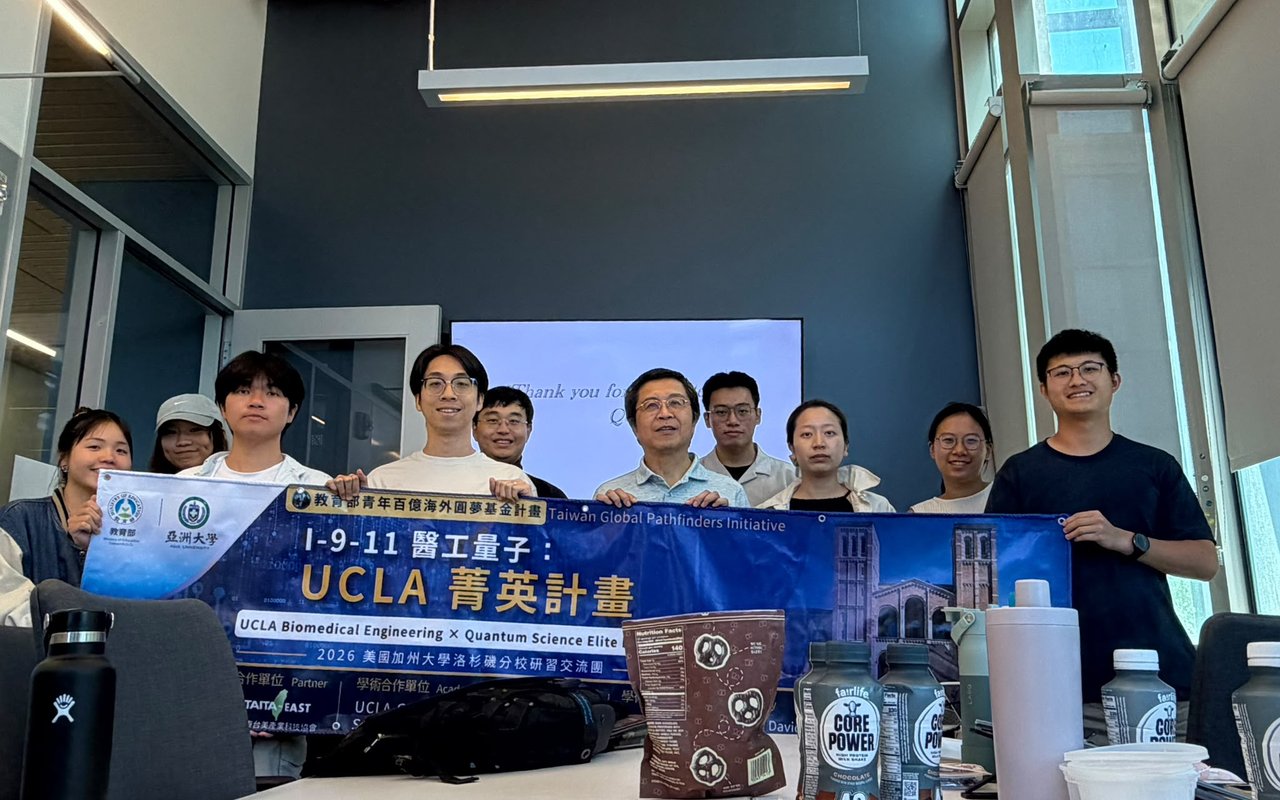
Field updates & photoslive during the program
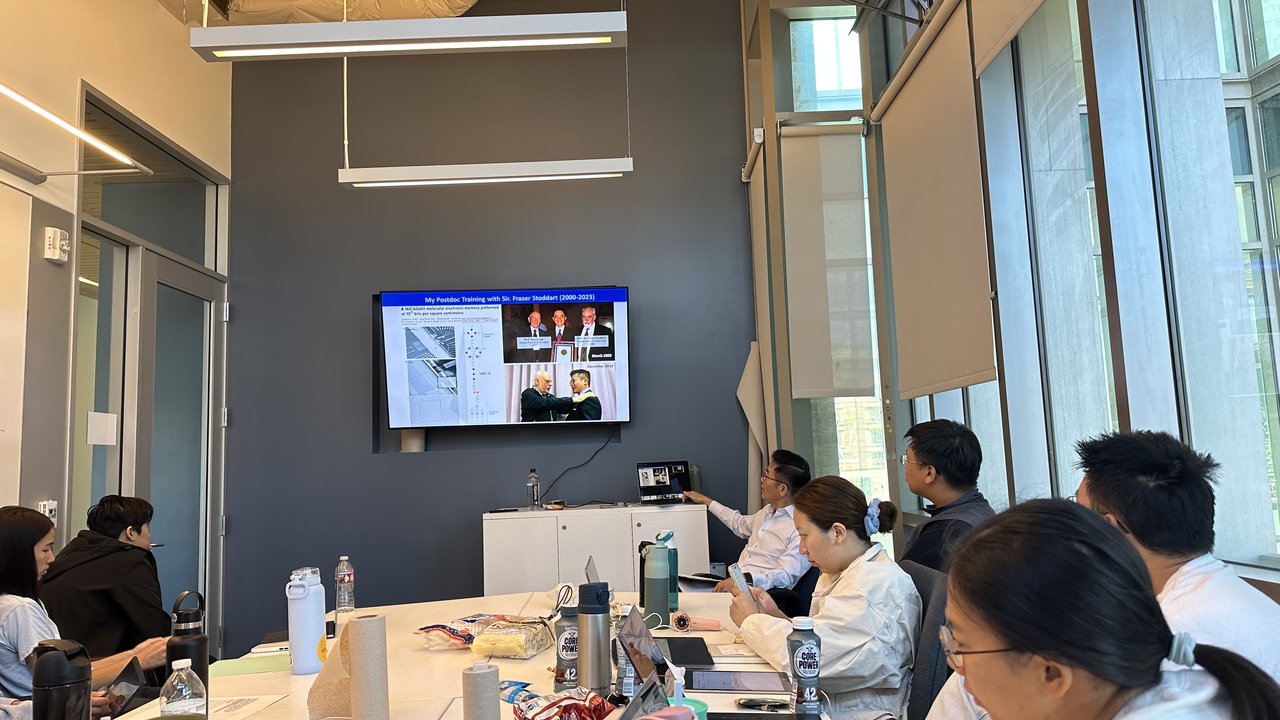
Hsian-Rong Tseng walked us through nanotechnology and liquid biopsy: the five generations of the NanoVelcro chip that captures circulating tumor cells, the shift toward extracellular vesicles via click chemistry, and uses that reach from cancer to prenatal screening. He traced chemotherapy back to mustard gas, looked ahead to patient 'digital twins', and reminded us that real success is a technology that reaches the clinic and helps a patient. Ka-Lok Ng (吳家樂) closed the week on convergent bioscience and biomedical innovation.
Digital Health & Innovation
Digital health, wearables and remote monitoring, with a CASIT / IDEAS Lab tour (Bijan Najafi, UCLA / David Geffen School of Medicine); AI in head-and-neck cancer surgery (Nikita Bedi); quantum systems and semiconductors to date (Kang Wang); AI security and privacy, defending against agents (Yuan Tian, UCLA); a field trip to Taboola; immunology and regulatory T-cells (Li-Fan Lu, UC San Diego).
A digital-health prototype: user journey, data flow, and ethics and privacy considerations.
Field updates & photoslive during the program
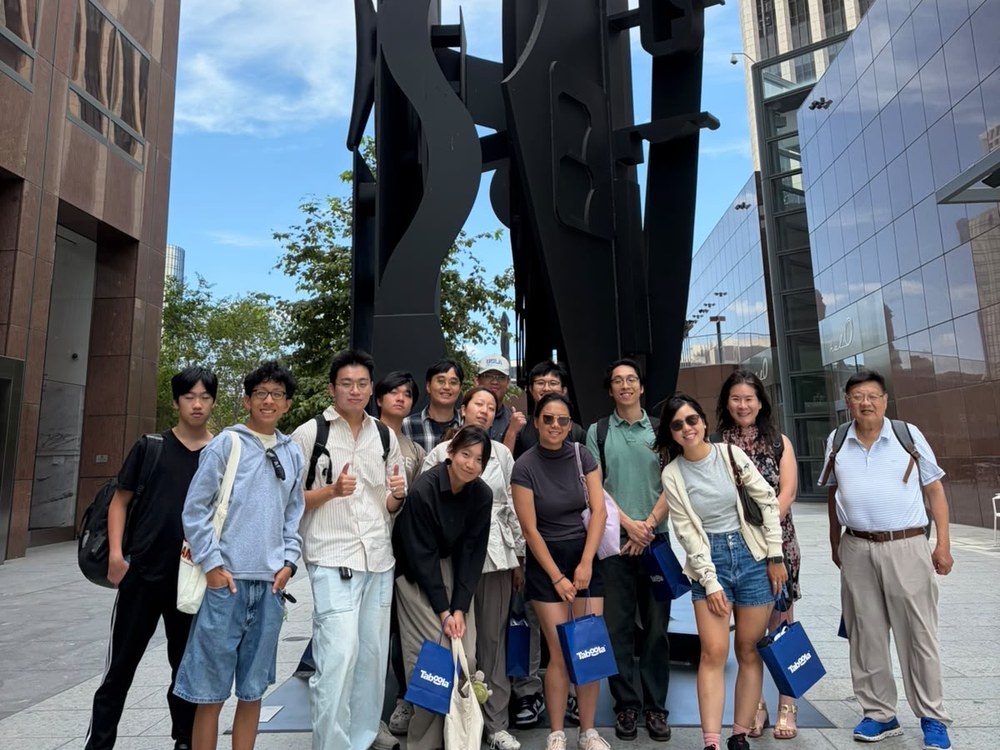
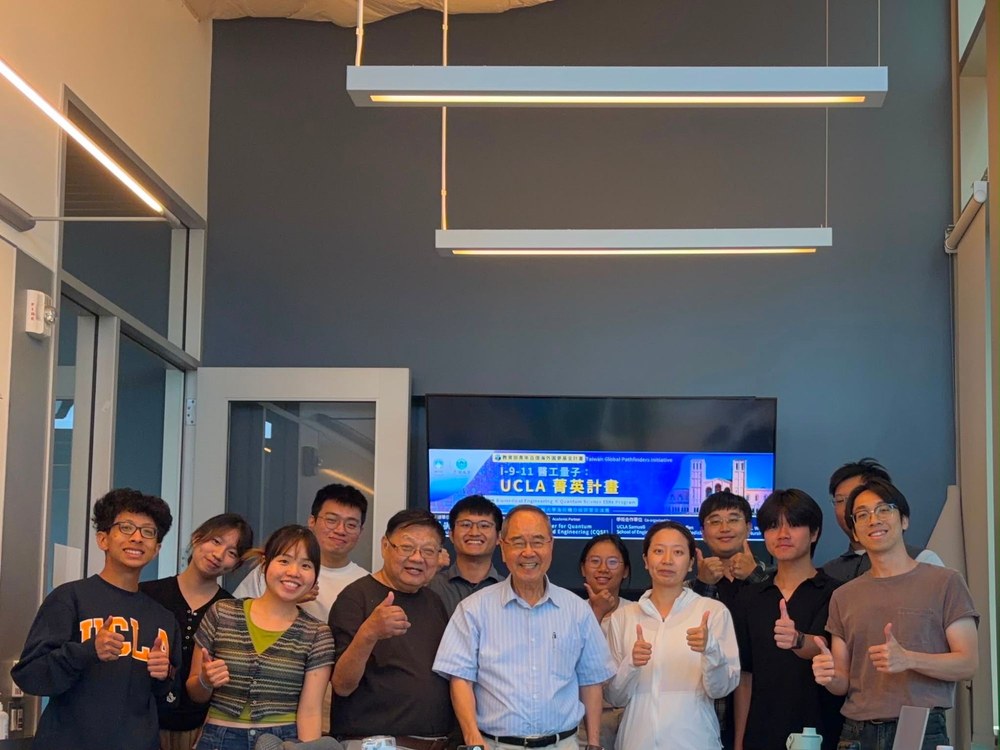
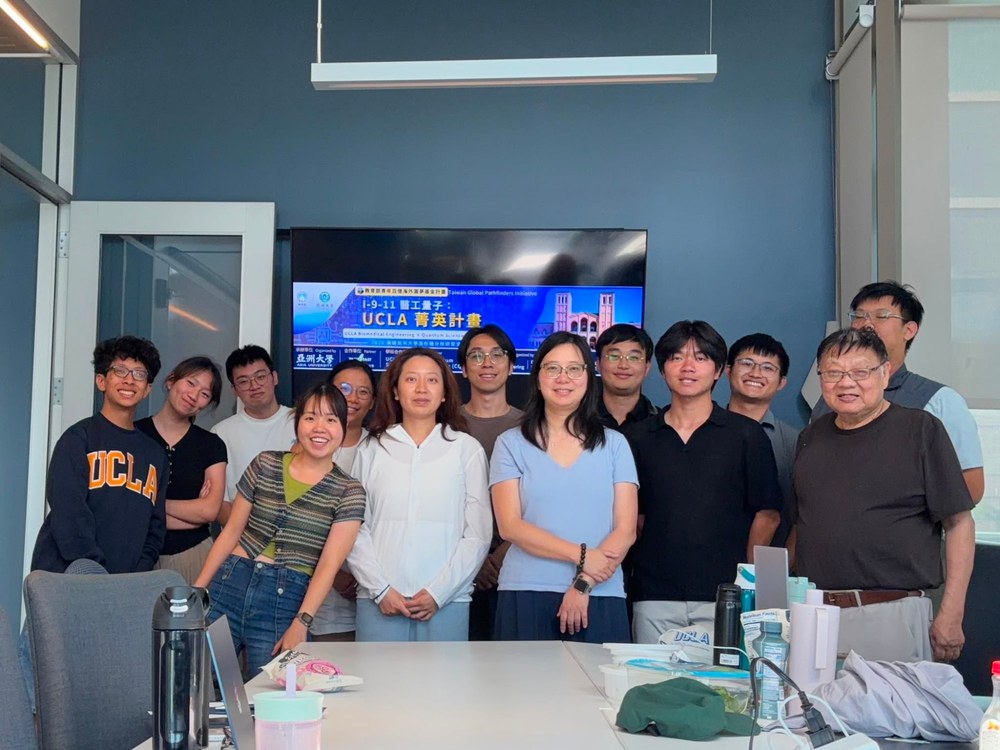
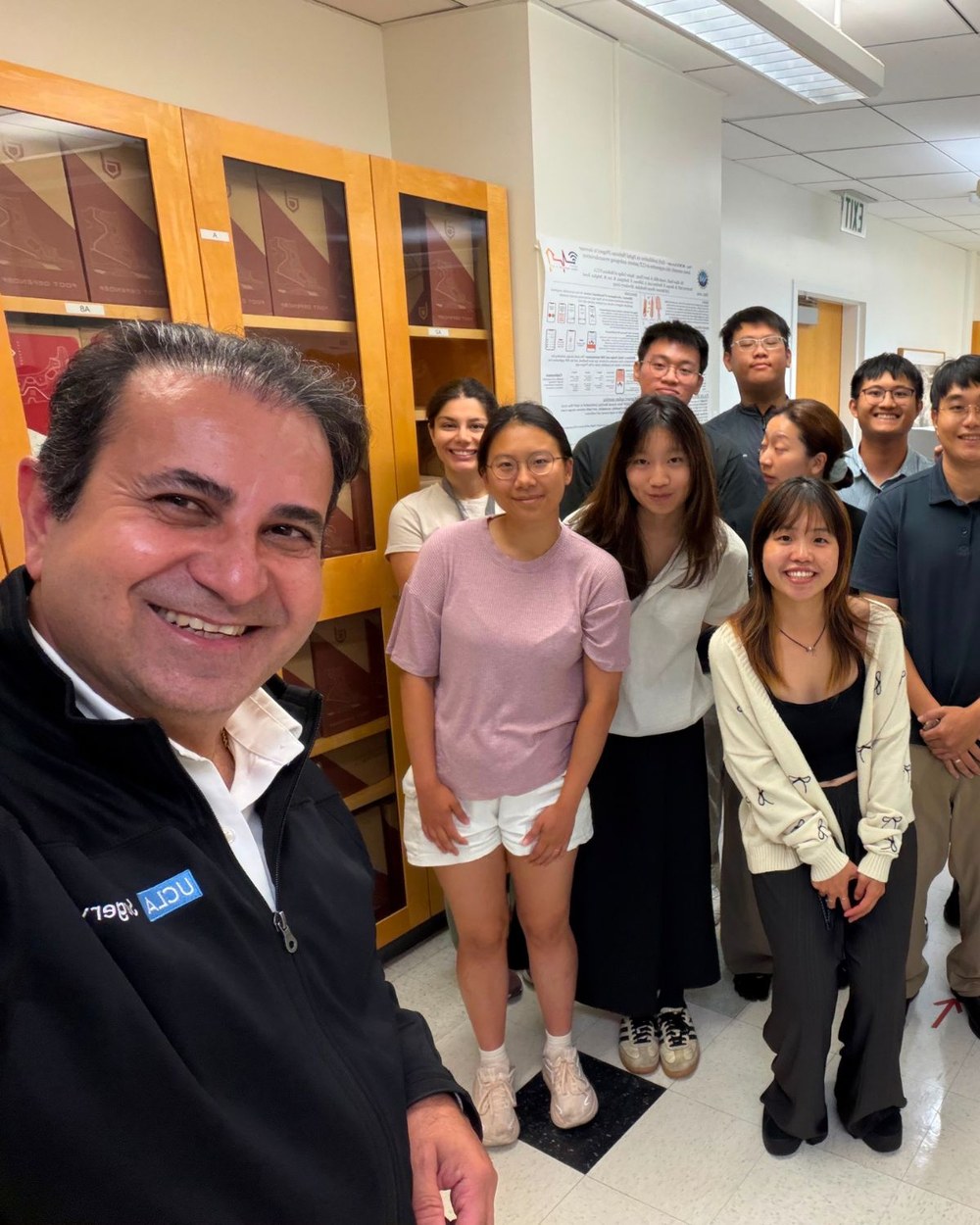
Bijan Najafi opened the week on digital health, arguing that the real breakthroughs live at the edges between fields and that a good wearable has to be simple enough for daily use; he showed 'nearable' home sensors and frailty meters built for an aging society and toured us through his CASIT / IDEAS Lab. Nikita Bedi showed how surgical AI breaks a head-and-neck operation into labelled phases so a model can learn from operating-room video. Kang Wang connected quantum behaviour to real semiconductors, from non-linearity and the germanium-to-silicon story to what '3nm' actually means and why new topological materials matter. Yuan Tian turned to AI security, defending against jailbreaks and prompt injection with inference-time steering rather than costly retraining. A field trip to Taboola showed recommendation AI at scale, where clean data is the real fuel. Li-Fan Lu closed the week on immunology and regulatory T-cells, tracing Foxp3 and peripheral tolerance to the 2025 Nobel Prize and to CAR-T reg cells.
Integrative & Traditional Chinese Medicine
Chinese, integrative and herbal medicine, acupuncture and the tongue-and-pulse diagnosis (Hung-Rong Yen, China Medical University); synthetic-diamond growth and diamond quantum sensing (Chih-Shiue Yan); acupuncture and moxibustion (Greg Zimmerman); integrative East-West medicine (Ka-Kit Hui, UCLA Center for East-West Medicine); a City of Hope field trip.
An integrative-medicine evidence map: how traditional and modern medicine can inform and validate one another.
Field updates & photoslive during the program
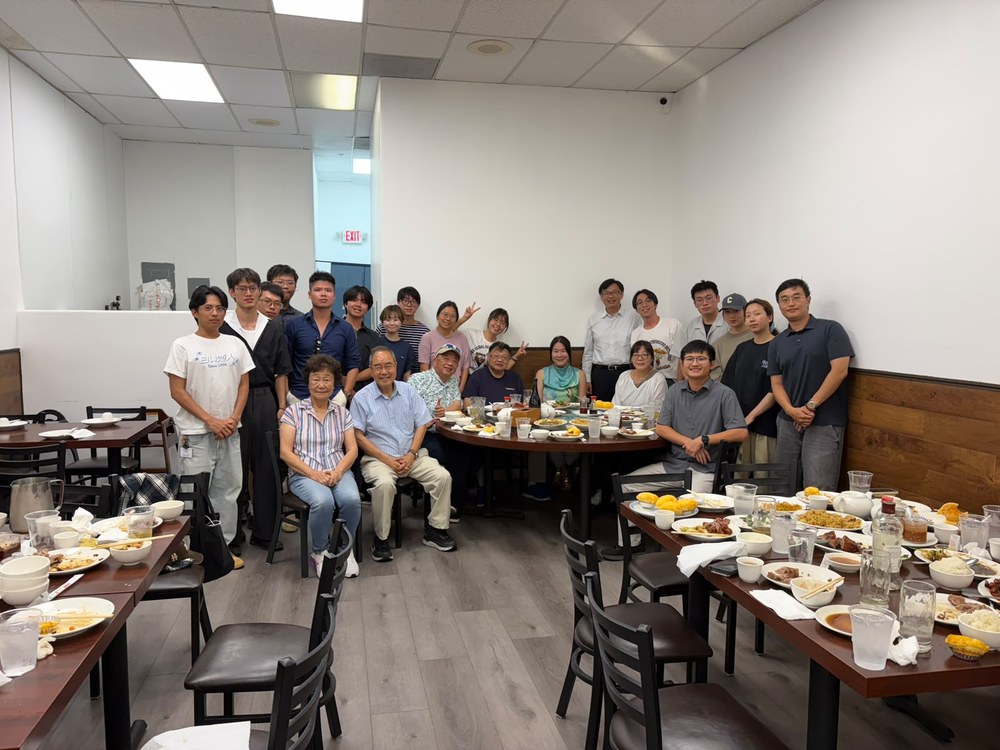
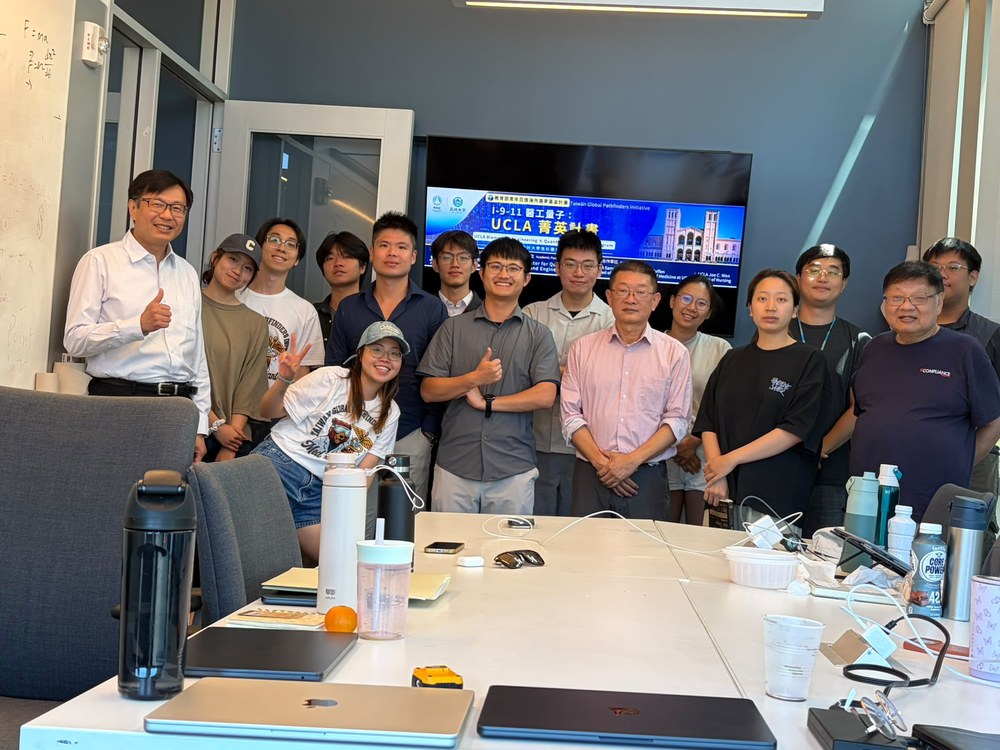
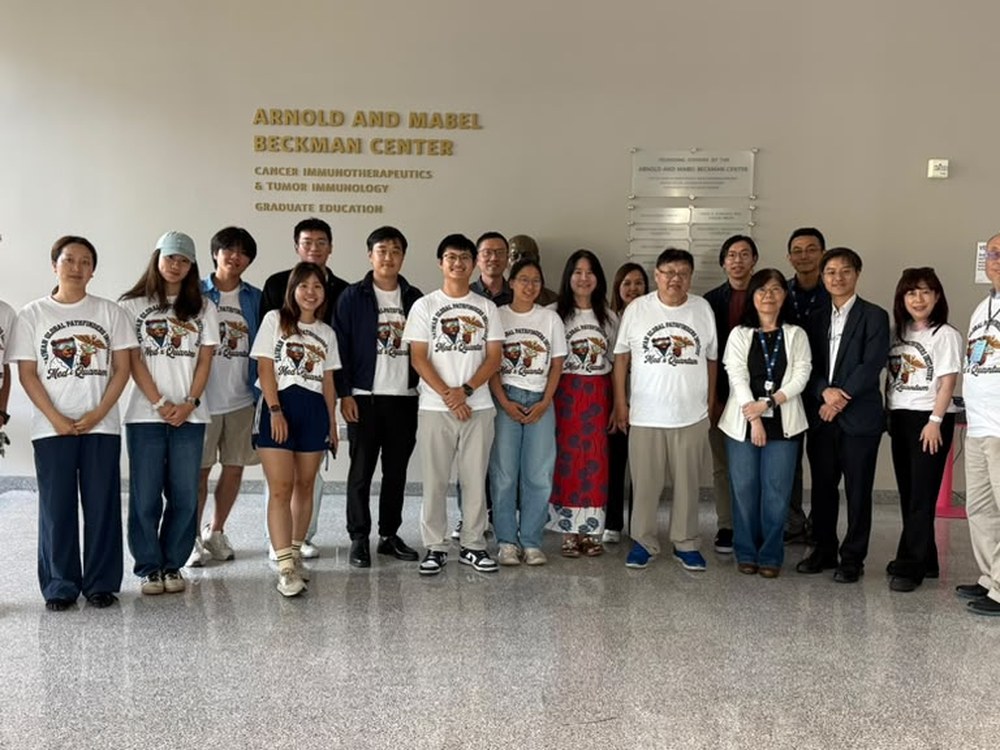
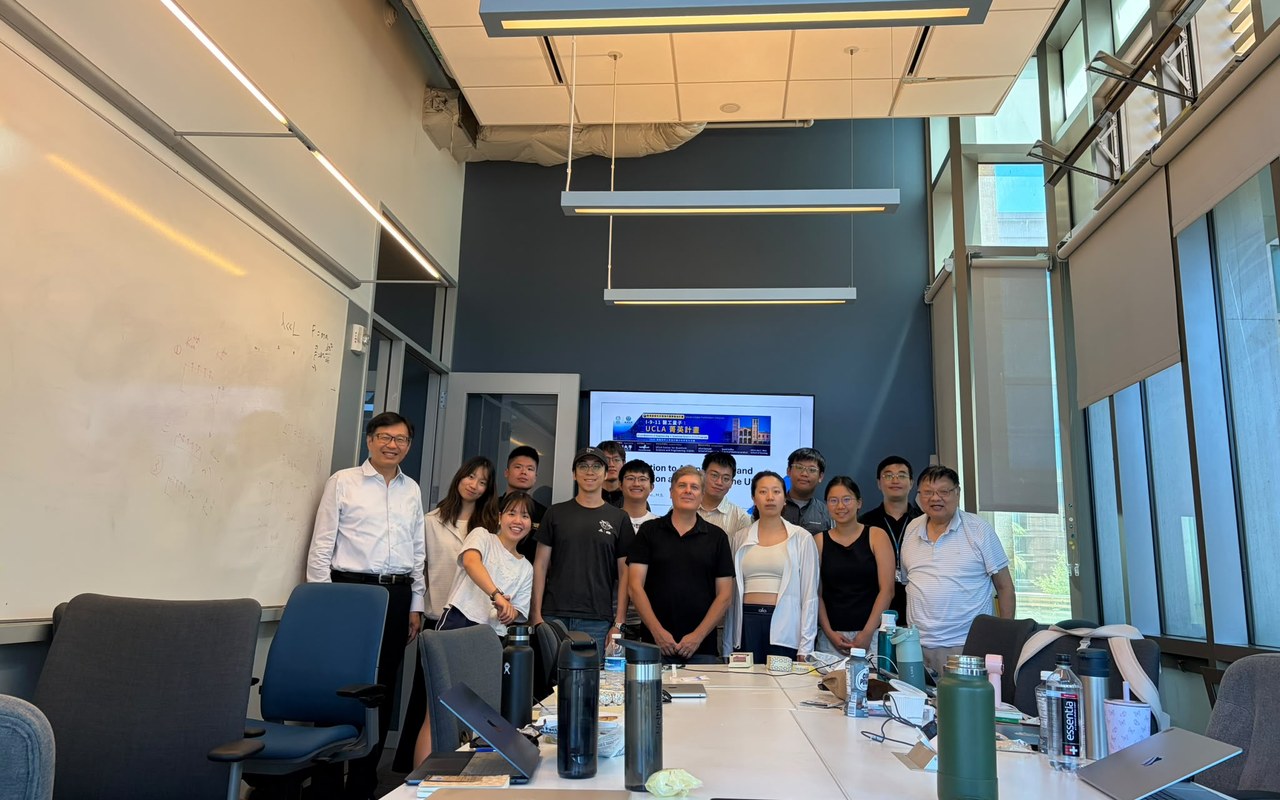
Hung-Rong Yen framed yin and yang not as things but as a dynamic balance, and walked us through the four diagnoses, reading the tongue and the pulse to infer what is happening inside, before showing how a Taiwanese database and AI 'doctor-twins' can flag herb-drug interactions and personalise integrative care. Chih-Shiue Yan explained how synthetic diamond is grown by CVD rather than high-pressure methods, and why a nitrogen-vacancy centre makes diamond both a room-temperature quantum bit and an extraordinarily sensitive magnetic sensor. Greg Zimmerman introduced acupuncture and moxibustion through channel (meridian) theory, insisting the tradition be explained in plain, biologically grounded terms rather than metaphor, and that accessibility and insurance matter as much as technique. Ka-Kit Hui tied the week together with integrative East-West medicine, and the delegation visited City of Hope to see translational cancer research up close.
Quantum Science / Applied Quantum
Applied quantum science and an industry guest talk; quantum platforms from hardware to algorithms (Roger Luo, Anyon Computing); quantum information and applied quantum science, with science policy and careers (Li-Wei Chou, NSTC / TECO Los Angeles); and a field trip to UC San Diego and BioLegend.
A final-project draft: research question, technical pathway, expected impact, and limitations.
Field updates & photoslive during the program
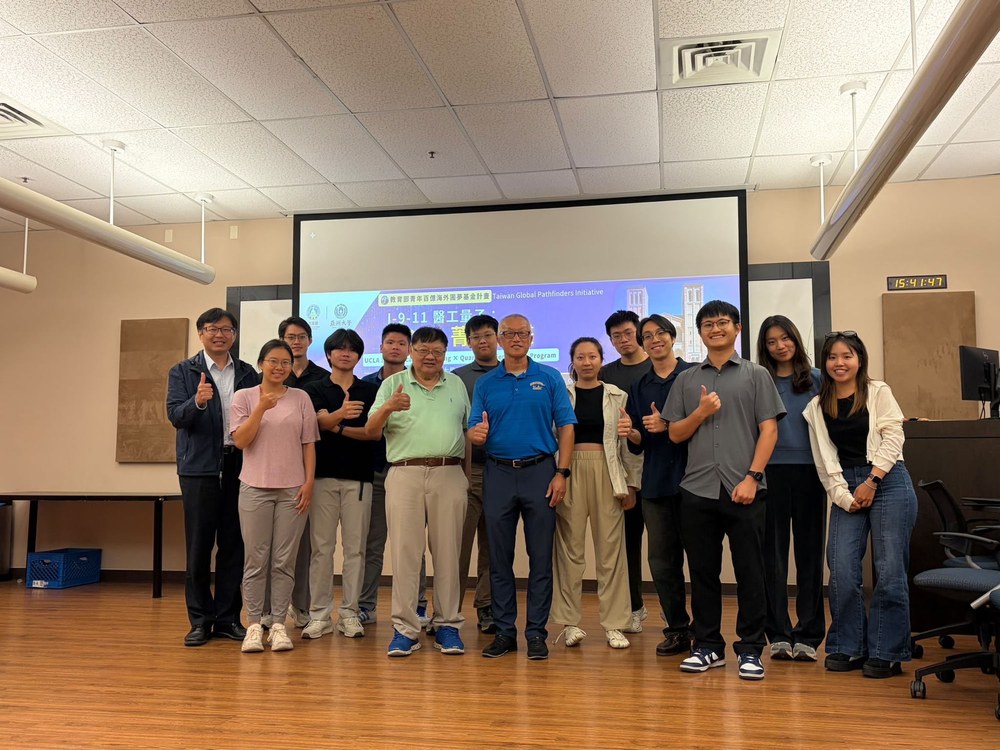
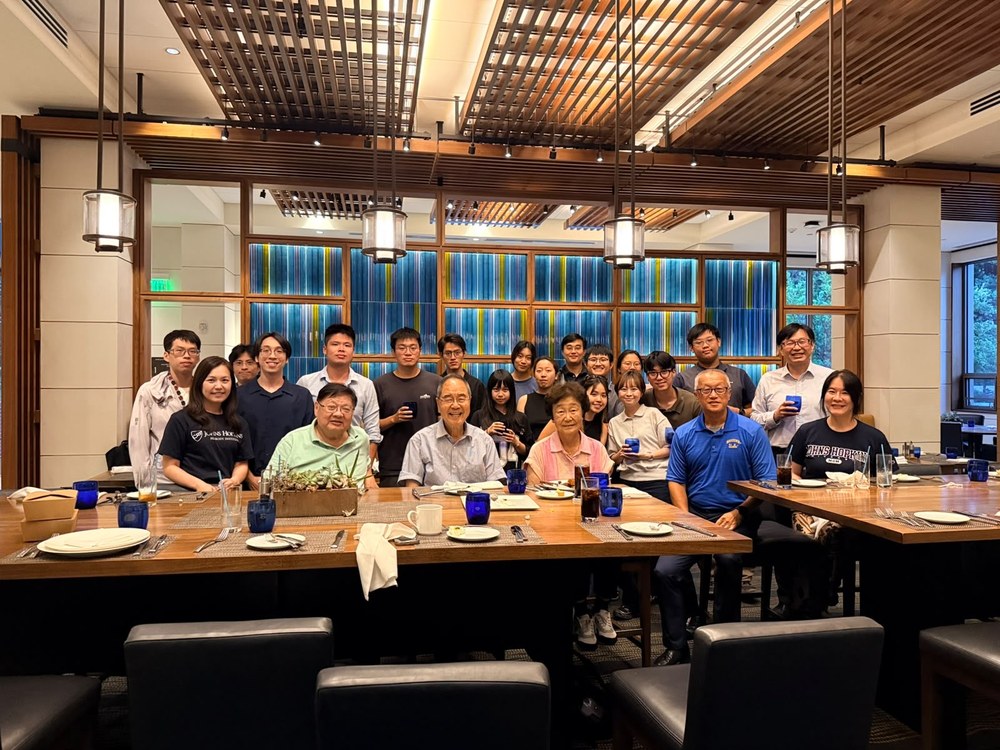
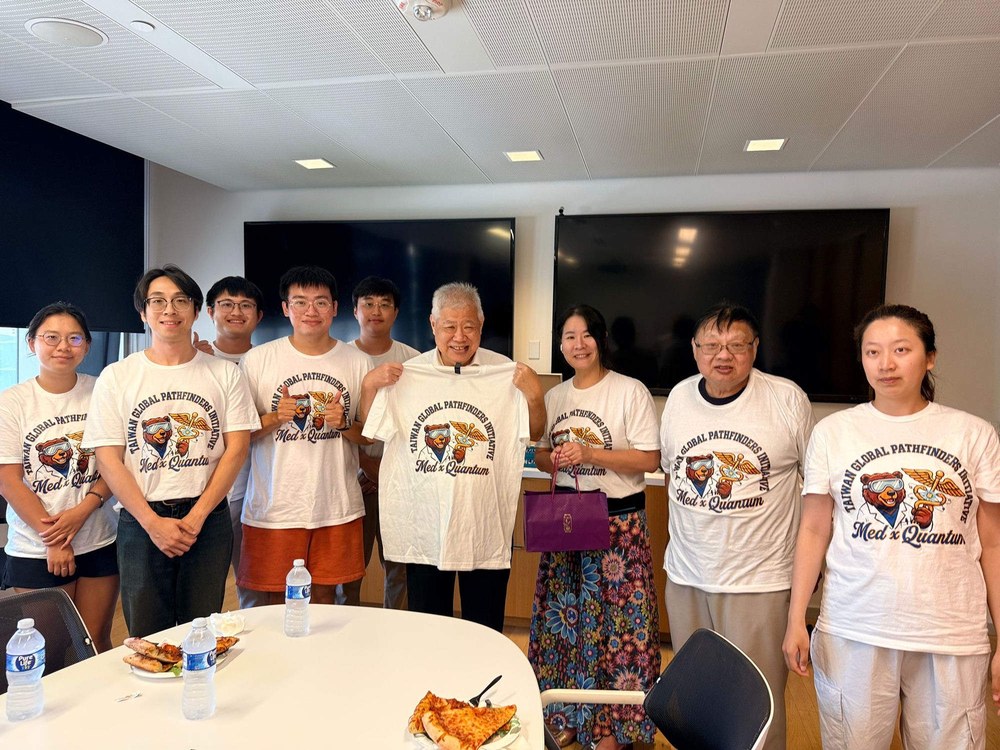
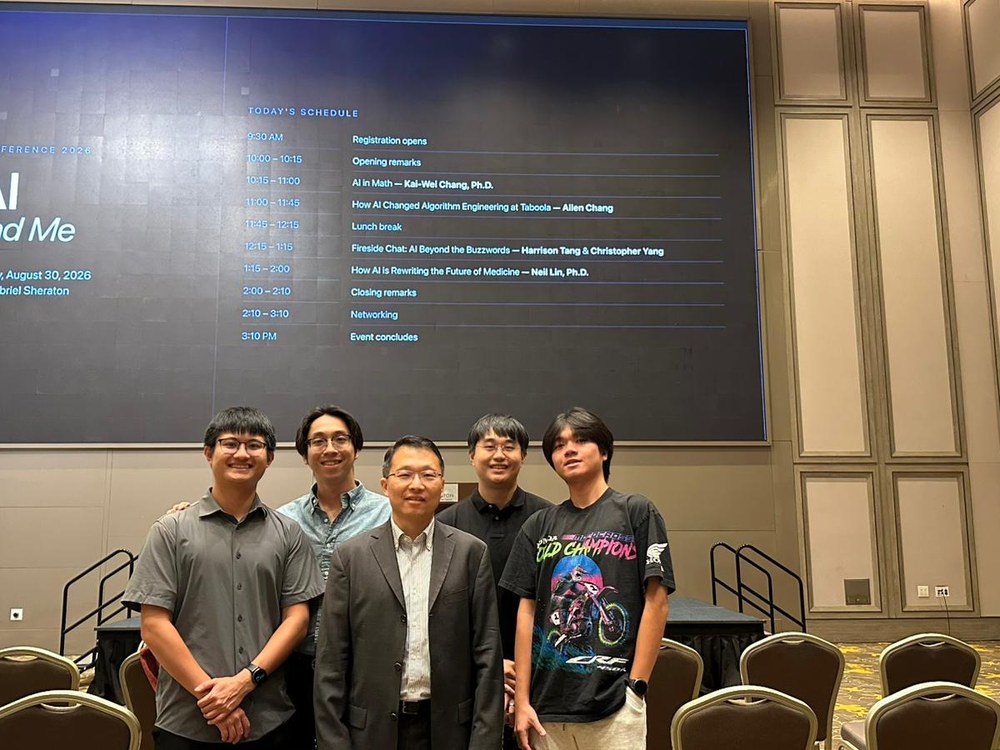
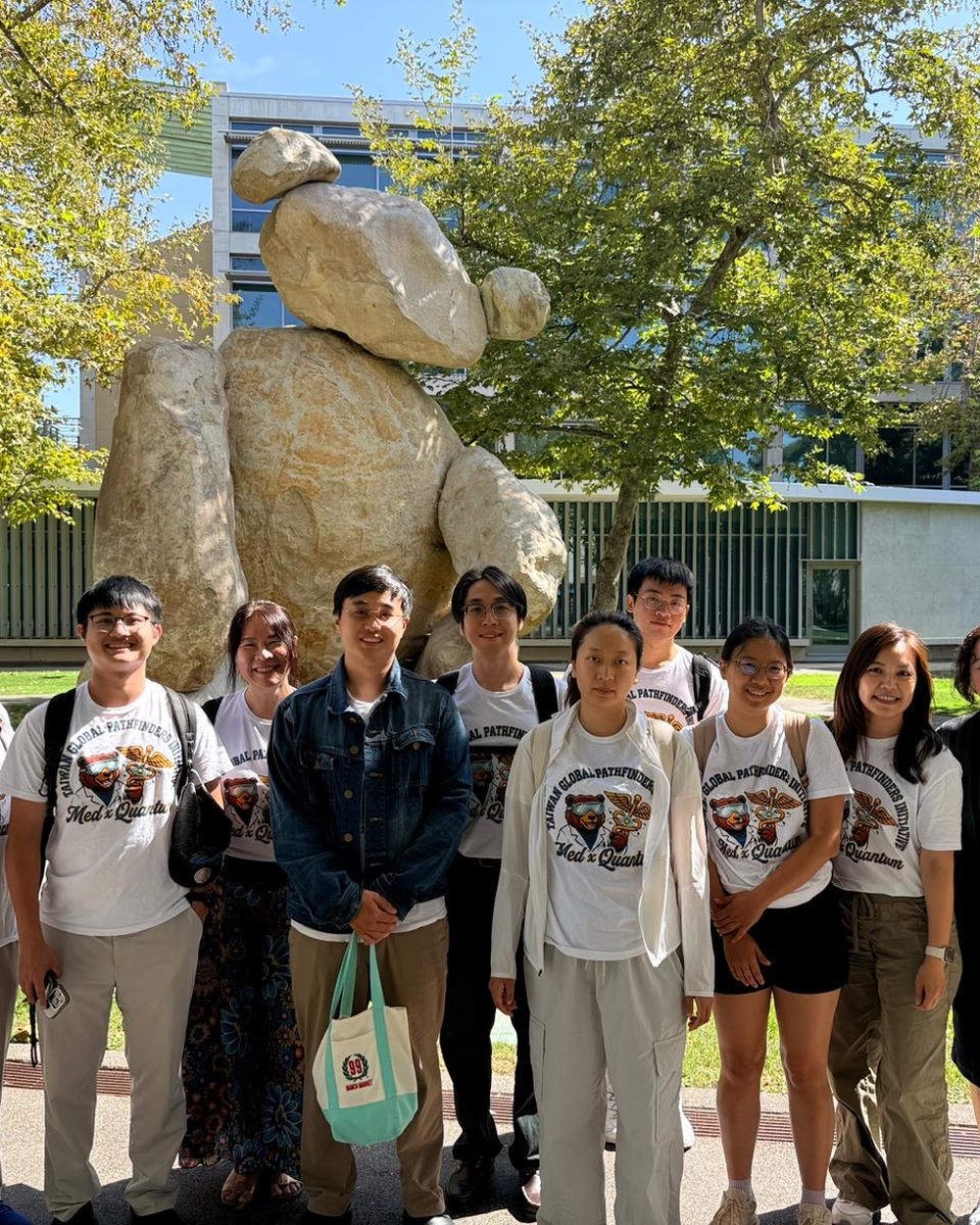
Week 8 pulled the quantum thread together. The applied-quantum sessions moved from the foundations we started with toward where quantum actually gets used, across computing, simulation, sensing and communication, with a guest talk adding an industry view. Roger Luo of Anyon Computing walked us down the stack from hardware to algorithms, showing what it really takes to turn fragile qubits into a working machine and why hybrid quantum-classical systems matter right now. Li-Wei Chou, from the NSTC science and technology office in Los Angeles, connected the science to policy and careers, and to how Taiwan backs students who want to build in this field. Between sessions the teams ran a draft clinic for their final projects, and the week closed with a trip to San Diego to visit UC San Diego and the biotech company BioLegend, a reminder that the quantum and biomedical sides of the program meet in the real world.
Final Integration, Report & Return
Final-project rehearsals and peer review: rubric scoring, time management, slide revision.
The final symposium: full presentation, individual reflection, portfolio, and thank-you notes. Then the return to Taiwan.

Field updates & photoslive during the program
Photos and notes from this week will be added live during summer 2026.